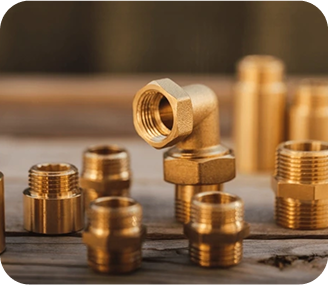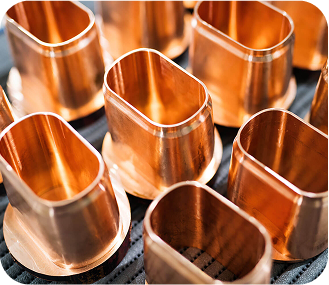

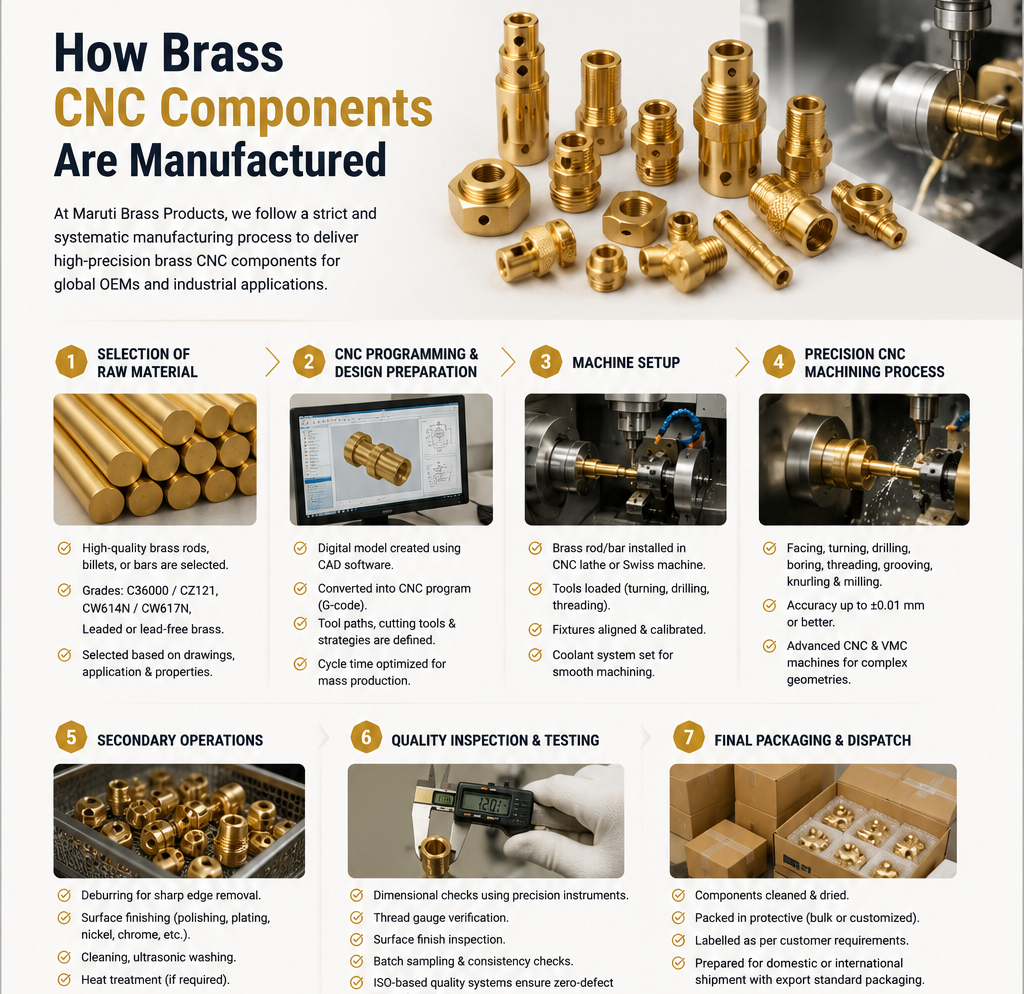
Brass CNC components are widely used in industries such as automotive, electrical, plumbing, and precision engineering due to their excellent machinability, corrosion resistance, and dimensional stability. At Maruti Brass Products, we specialize in manufacturing high-precision brass CNC components that meet international quality standards and OEM requirements.
In this article, we explain the complete step-by-step process of how brass CNC components are manufactured.
1. Selection of Raw Material
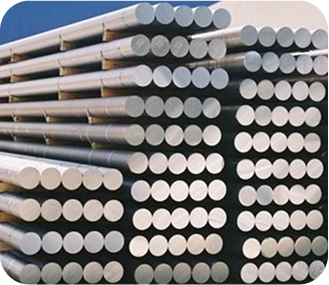
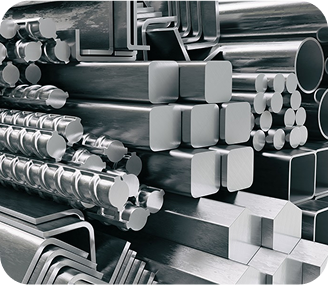
The manufacturing process begins with selecting high-quality brass raw material, typically in the form of rods, billets, or bars.
Common grades include:
- Free Cutting Brass (C36000 / CZ121)
- CW614N / CW617N
- Leaded and lead-free brass (based on application)
At Maruti Brass Products, material selection is done based on customer drawings, application requirements, and required mechanical properties.
2. CNC Programming & Design Preparation
Before machining begins, engineers prepare a digital model of the component using CAD software.
This stage includes:
- Converting drawings into CNC programs (G-code)
- Defining tool paths
- Selecting cutting tools and machining strategy
- Optimizing cycle time for mass production
This ensures high precision and repeatability for every component produced.
3. Machine Setup
Once programming is completed, the CNC machine is prepared for production.
Setup includes:
- Installing brass rod/bar in CNC lathe or Swiss-type machine
- Tool loading (turning, drilling, threading tools)
- Fixture alignment and calibration
- Coolant system setup for smooth machining
Proper setup is critical to achieve tight tolerances.
4. Precision CNC Machining Process
This is the core stage where raw brass is converted into a finished component.
Operations include:
- Facing and turning
- Drilling and boring
- Thread cutting (internal & external)
- Grooving and knurling
- Milling (for complex geometries)
Modern CNC machines ensure accuracy up to ±0.01 mm or better, depending on the part complexity.
At Maruti Brass Products, we use advanced CNC and VMC machines to manufacture complex geometries with consistent precision.
5. Secondary Operations
After primary machining, components may require additional processes such as:
- Deburring (removal of sharp edges)
- Surface finishing (polishing, nickel plating, chrome, etc.)
- Cleaning and ultrasonic washing
- Heat treatment (if required for specific applications)
These steps improve both performance and appearance of the component.
6. Quality Inspection & Testing
Every brass CNC component undergoes strict quality control checks.
Inspection methods include:
- Dimensional measurement using precision instruments
- Thread gauge verification
- Surface finish inspection
- Batch sampling and consistency checks
At Maruti Brass Products, we follow ISO-based quality systems to ensure zero-defect manufacturing for OEM customers.
7. Final Packaging & Dispatch
After approval, components are:
- Properly cleaned and dried
- Packed in protective packaging (bulk or customized)
- Labelled as per customer requirements
- Prepared for domestic or international shipment
We also support export packaging standards for safe global delivery.
Why Brass CNC Components Are Preferred
Brass is one of the most widely used materials in precision machining because of:
- Excellent machinability
- High corrosion resistance
- Good electrical conductivity
- Low friction properties
- Superior surface finish capability
These properties make brass ideal for critical engineering applications.
Maruti Brass Products – Your Trusted Manufacturing Partner
Maruti Brass Products is a leading manufacturer and exporter of precision brass components based in India. We specialize in CNC machined parts for OEMs across multiple industries.
Our strengths include:
- High-precision CNC machining capability
- Custom component manufacturing as per drawing
- Consistent quality control systems
- Export-oriented production standards
- Fast turnaround time and reliable delivery
We believe in building long-term partnerships by delivering precision, performance, and trust.
Conclusion
The manufacturing of brass CNC components is a highly precise and systematic process involving advanced machinery, skilled engineering, and strict quality control. From raw material selection to final inspection, every step plays a vital role in ensuring performance and reliability.
With its strong technical expertise and modern production facilities, Maruti Brass Products continues to deliver world-class brass CNC components to global industries.